Improving The Accuracy of Area Sampling Frame Estimators Using Unequal Clustered Segment Sampling
Conference
10th International Conference on Agricultural Statistics
Format: CPS Abstract - ICAS 2026
Keywords: agricultural statistics, rice, sampling_design
Abstract
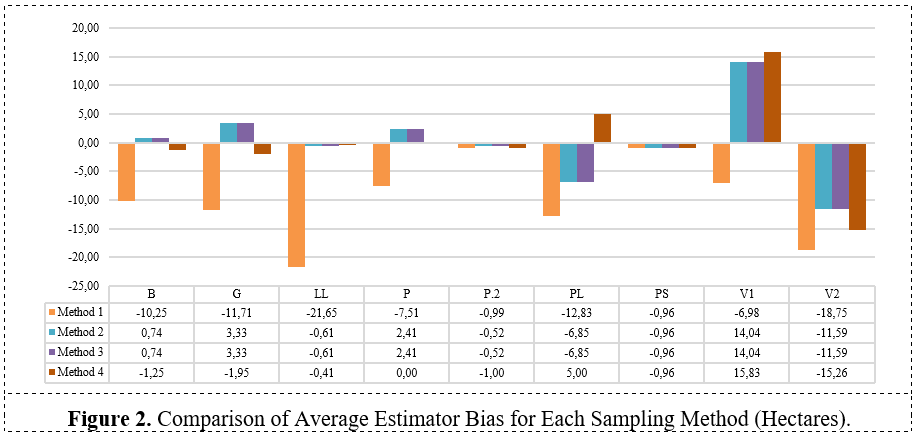
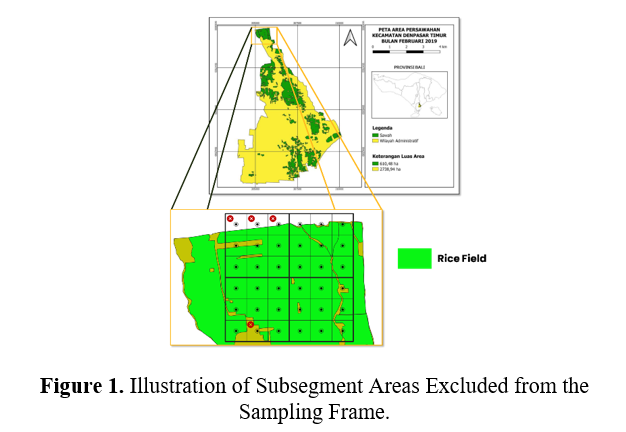
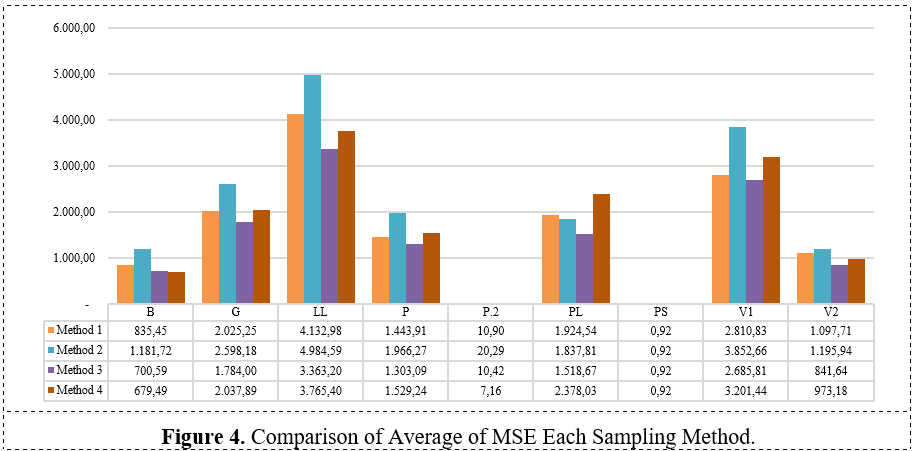
Accurate rice production data is essential for national food security and effective policy planning. The Area Sample Frame (Kerangka Sampel Area – KSA) method has been widely used to estimate rice harvest areas. However, this method has certain limitations, particularly the risk of undercoverage bias when estimating the area across different rice growth stages. This study aims to improve the accuracy of rice area estimations by applying the Unequal Clustered Segment Sampling method as an alternative to the traditional KSA. The proposed method enhances the estimator by excluding non-target segments, that is, spatial points located outside actual rice-growing regions. Using a design-based approach, the estimator accounts for unequal cluster sizes, leading to a more precise representation of field conditions. The results demonstrate that the Unequal Clustered Segment Sampling method significantly reduces bias and improves estimation accuracy compared to the conventional KSA approach. Thus, applying unequal clustered segment sampling designs in KSA-based surveys can yield more reliable and representative estimates, especially in heterogeneous or fragmented agricultural landscapes.
Figures/Tables
Screenshot 2025-09-08 205555
Screenshot 2025-09-08 205516
Screenshot 2025-09-08 205457