Acquisition and Organization of Food Composition Data Using a Neuro-symbolic Approach
Conference
10th International Conference on Agricultural Statistics
Format: CPS Paper - ICAS 2026
Keywords: malnutrition
Abstract
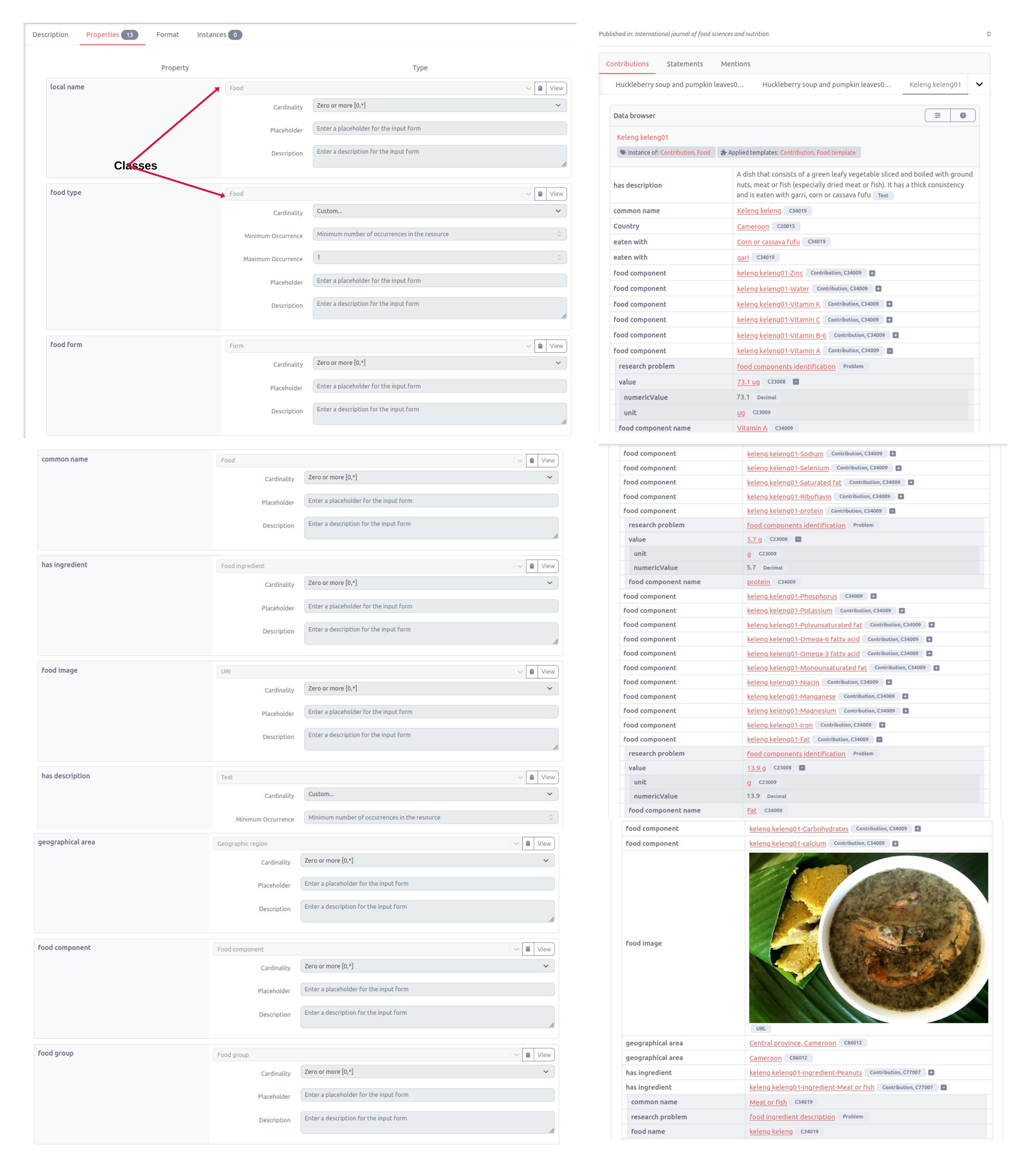
To address the problem of malnutrition, in addition to the improvement of agricultural practices, a solution consists of compiling data about the food consumed and its composition into usable databases such as Food Composition Tables (FCTs) or Food Composition Databases (FCDB). However, existing solutions result in isolated datasets with limited interoperability, poor semantic integration, and restricted machine-readability, which hinder large-scale data linking, querying, and reuse. In this work, we propose to leverage large language models (LLMs) and knowledge graphs (KGs) to build a neuro-symbolic knowledge graph (NeSyKG). The latter aims for the acquisition, organization and diffusion of food composition data in compliance with the FAIR (Findable, Accessible, Interoperable and Reusable) principles. The case study consists of the collection, and organization of Cameroonian food composition data using the neuro-symbolic Open Research Knowledge Graph (ORKG). The main results involve: (1) A neuro-symbolic approach for food composition data acquisition and organization; (2) The extraction and organization of Cameroonian food composition data from 15 scientific papers; (3) and a live review describing Cameroonian FCT, freely available from the ORKG platform.
Figures/Tables
template-1