MGWR and GAM based Model Calibration Technique for Spatially Correlated Populations under Complex Sampling Design
Conference
10th International Conference on Agricultural Statistics
Format: CPS Paper - ICAS 2026
Keywords: generalized additive models, geographically weighted regression, model calibration, multi-scale geographically weighted regression, simulation
Abstract
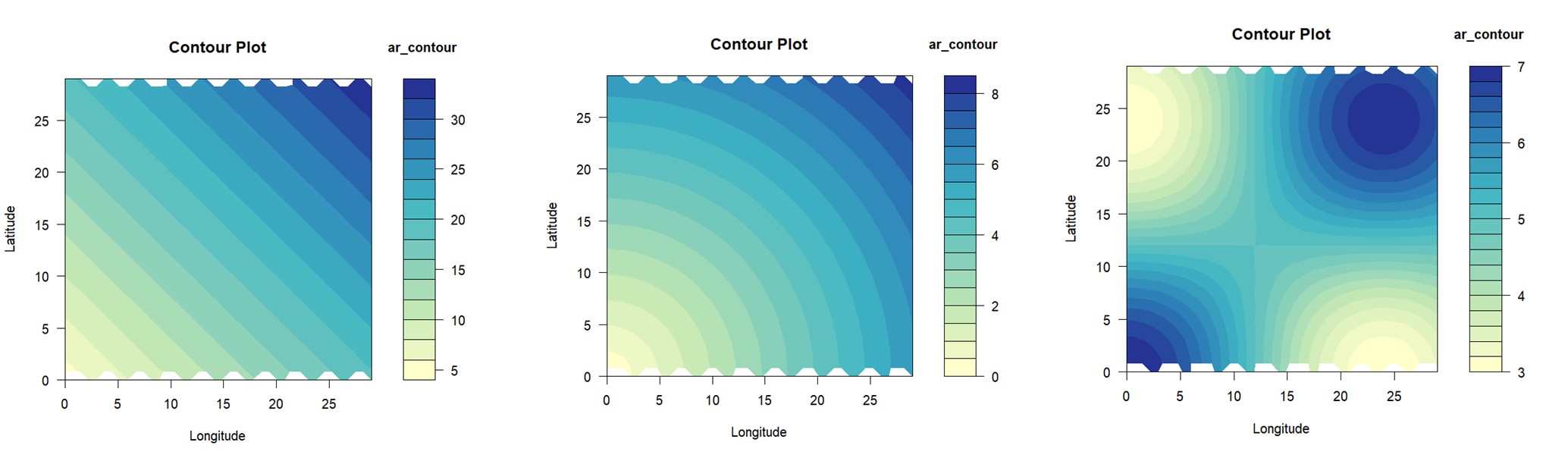
In sample surveys, the calibration approach is widely used to incorporate known population characteristics of auxiliary variables at the estimation stage. The model-calibration approach represents an advancement over the traditional calibration method by allowing the incorporation of more complex models in survey sampling. In many surveys, observations tend to be more similar for nearby units than for those located farther apart, and the relationship between study and auxiliary variables often varies across locations. This phenomenon is referred to as spatial non-stationarity. Unlike ordinary least squares, the Geographically Weighted Regression (GWR) model (Brunsdon et al., 1996) accounts for spatial non-stationarity and captures spatially varying relationships among variables. The Multi-Scale Geographically Weighted Regression (MGWR) model (Fotheringham et al., 2017) further extends this by allowing different covariates to operate at distinct spatial scales (bandwidths), yielding more precise estimates of population parameters. Generalized Additive Models (GAMs) (Hastie and Tibshirani, 1990) flexibly capture non-linear relationships. In our recent work (Saha et al., 2023, 2025), GWR-based model calibration estimators of the population total were proposed in the context of geo-referenced simple random sampling and two-stage sampling designs. Building on these contributions, the present study develops MGWR-based and GAM-based model calibration estimators of the population total under complex surveys, when complete auxiliary population information and location parameters are available. The proposed estimators are shown to be asymptotically design-unbiased and approximately model-unbiased under a set of regularity conditions. Furthermore, their approximate variances and corresponding variance estimators are derived. The performance of the proposed estimators is evaluated through spatial simulation experiments across a wide range of scenarios and compared with existing estimators, including the Horvitz–Thompson, ratio, regression, and GWR-based model calibration estimators. Simulation results demonstrate that the MGWR- and GAM-based calibration estimators are approximately design-unbiased, as indicated by percentage relative bias (%RB), and more efficient than their counterparts, as measured by percentage relative root mean square error (%RRMSE). Notably, the GAM-based calibration estimators outperform the MGWR-based estimators. However, as the sample size increases, the efficiency advantage of GAM diminishes, and MGWR-based estimators become superior. The results confirm that the proposed methodology can significantly enhance the estimation of finite population parameters by leveraging complete auxiliary information under complex survey designs in the presence of spatial non-stationarity.
Figures/Tables
Picture1