For more details on registrations and submissions for the Metaheuristic Methods for Variable Selection: & Survival Analysis, please first login to your account. If you do not have an account then you can create one below:
Instructors: Maria Kontorinaki & Monique Sciortino
This short course introduces metaheuristic algorithms as powerful tools for variable selection. Variable selection is a well-established topic in regression modelling, with widespread applications across diverse fields, as it reduces the model’s complexity, enhances predictive accuracy and improves model interpretability. Selecting the most appropriate variables in regression models can be formulated as a combinatorial optimisation problem, where the goal is to choose explanatory variables that optimise the model's fit according to a given statistical criterion (objective function). While traditional selection methods (e.g., stepwise regression, Lasso, etc.) are often limited by rigid assumptions, metaheuristics offer more flexible and efficient alternatives that can handle complex, high-dimensional, and multimodal search spaces. In particular, metaheuristics are high-level algorithmic frameworks that provide strategies for solving complex optimisation problems. Among these, Genetic Algorithms (GA), Simulated Annealing (SA), and Tabu Search (TS) have gained significant attention for their ability to explore large and complex solution spaces.
Instructors: Liberato Camilleri & Derya Karagöz
This short course introduces several approaches to survival data analysis. The first approach is the traditional approach by using non parametric (Kaplan Meier and Nelson Aalen estimators), semi-parametric (Cox survival analysis) and parametric techniques. For the latter approach, several proportional hazard survival models will be considered by assuming five distributions, including the exponential distribution appropriate for constant hazard; the Gompertz and Weibull distributions appropriate for monotonic increasing/decreasing hazard; and the lognormal and loglogistic distributions for humped hazard. The above models assume that the population under investigation is fairly homogeneous; however, in the presence of unobserved heterogeneity these models are not appropriate and tend to provide biased results. The second approach considers the inclusion of frailty, which is a latent variable, to cater for this unobserved heterogeneity. Two approaches will be considered, where the unshared frailty approach assumes that different individuals have distinct frailties; while the shared frailty approach assumes that individuals within a cluster share the same frailty. In both cases, two frailty distributions will be considered, which include the Gamma and Inverse Gaussian distributions.
Venue Address: University of Malta Valletta Campus, St Paul Street, Valletta VLT 1216, Malta
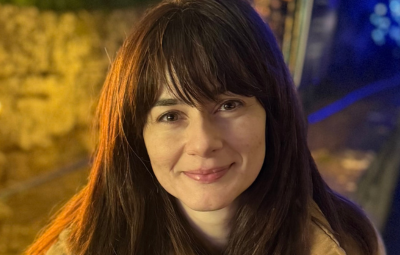
Senior lecturer with the Department of Statistics and Operations Research at the University of Malta.
Maria Kontorinaki has been a senior lecturer with the Department of Statistics and Operations Research at the University of Malta since September 2018. She received her Ph.D. in Traffic Flow Modeling and Control from the Technical University of Crete, Chania, Greece. Her PhD dissertation received the 2018 IEEE ITS Best Dissertation Award (second prize), which is given annually to the best dissertation in any Intelligent Transportation Systems (ITS) area that is innovative and relevant to practice. Currently, her teaching and research interests lie at the intersection of statistical learning, optimisation, and operations research. She has supervised numerous undergraduate and postgraduate projects involving the modelling of large-scale real-world problems, the development of optimisation methods, as well as other projects related to statistics and machine learning.

Academic and researcher specializing in mathematics, statistics and operations research.
Monique Sciortino is an academic and researcher specializing in mathematics, statistics and operations research. She has been an Assistant Lecturer at the University of Malta since 2017 and a PhD candidate in Mathematics at Cardiff University since 2019. Her doctoral research focuses on developing mathematical algorithms for optimizing school bus routing. Holding a Master’s in Operations Research with Distinction and a First Class Honours B.Sc. in Mathematics,Statistics and Operations Research, Monique has received multiple academic awards, including yearly Dean of Science awards and the Technoline Special Prize for Science. In addition to her teaching and research roles, she has contributed to multiple peer-reviewed publications and supervised several undergraduate and postgraduate dissertations. Beyond academia, she actively participates in science outreach and voluntary work, sharing her knowledge to benefit others beyond the university setting.

Liberato Camilleri studied Mathematics and Statistics at the University of Malta. He received his PhD degree in Applied Statistics in 2005 from Lancaster University. His research specialization areas are related to statistical models, which include Generalized Linear models, Latent Class models, Multilevel models, Item Response models, Generalized Estimating Equations and Survival models. Liberato has co-authored three books and around 220 publications with local and foreign researchers in several fields of application including neural networks, operations research, market research, education, SEBD, health and atmospheric chemistry. Liberato has participated in a number of funded projects– CONSENT funded by FP7, RESPIRA financed through the Italia-Malta 2007-2013 fund; Digital and Video Game usage in Malta commissioned by the University of Malta in collaboration with the Malta Communication Authority (MCA); Evaluation of School based Prevention Programmes commissioned by the National Commission on the Abuse of Drugs, Alcohol and Other Dependencies; Manual of Standardized Tests for Dyslexia commissioned by the Directorate for Quality and Standards in Education, University of Malta and the MATSEC Board; Trends in Food Consumption by Maltese Adults funded by Malta Standards Authority (MSA); Liberato was also commissioned to write a number of national reports by the Maltese Ministry of Education and Employment which include considerable statistical analysis - PIRLS 2011, 2015 and 2022 reports; TIMSS 2011, 2015, 2019 and 2024 reports; European Survey on Language Competences 2010 report; ICILS 2024 report; PISA 2009, 2015, 2018 and 2023 reports; ICCS 2009, 2016 and 2023 reports; and TALIS 2018 and 2024.
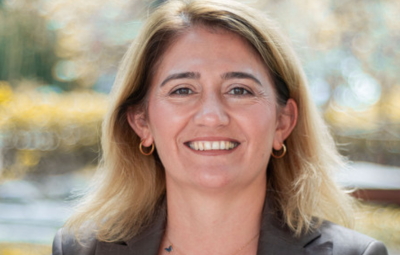
Senior Lecturer at the University of Malta, within the Department of Statistics and Operations Research.
Derya Karagöz is a Senior Lecturer at the University of Malta, within the Department of Statistics and Operations Research. She earned her BSc, MSc, and PhD degrees in Statistics from Hacettepe University, Turkey, completing her doctoral research on Robust ANOVA in 2012, with collaborative research stays at the University of Malta (2006–2007) and KU Leuven (2007–2009). Dr. Karagöz specializes in robust statistical methods, quality control, survival analysis, and design of experiments. Her teaching experience spans over 20 years and covers statistical programming (SAS, R, SPSS), quality control charts, robust statistics, experimental design, probability, and computational methods in statistics and operations research. Dr. Karagöz continues to advance research in robust statistical modelling and quality improvement methodologies, supervising undergraduate and postgraduate research and collaborating with international partners in statistical science.
For more details on registrations and submissions for the Metaheuristic Methods for Variable Selection: & Survival Analysis, please first login to your account. If you do not have an account then you can create one below: